Bunyip: The Terror of the Billabong
The Silence of the Swamp
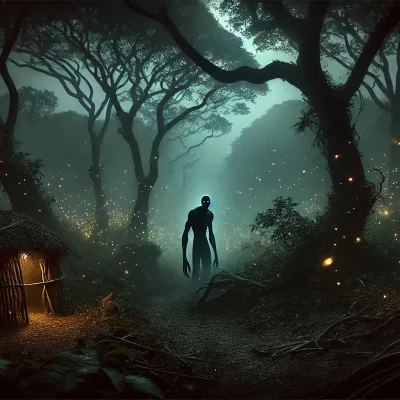
The Australian bush is defined by noise—the scream of cicadas, the laugh of kookaburras, the screech of cockatoos. But there are pockets of water where the bush goes unnaturally silent. These are the billabongs (oxbow lakes).
If the birds stop singing near a waterhole, it is not a weather anomaly. It is a presence. The water ripples without wind. A bellowing roar, often compared to cannon fire, vibrates through the mud. The Bunyip is awake.
The Shape of Fear
The Bunyip is a taxonomic nightmare because it refuses to hold a single form. Aboriginal oral history and settler accounts describe a shapeshifter that adapts to its environment.
Common descriptions include:
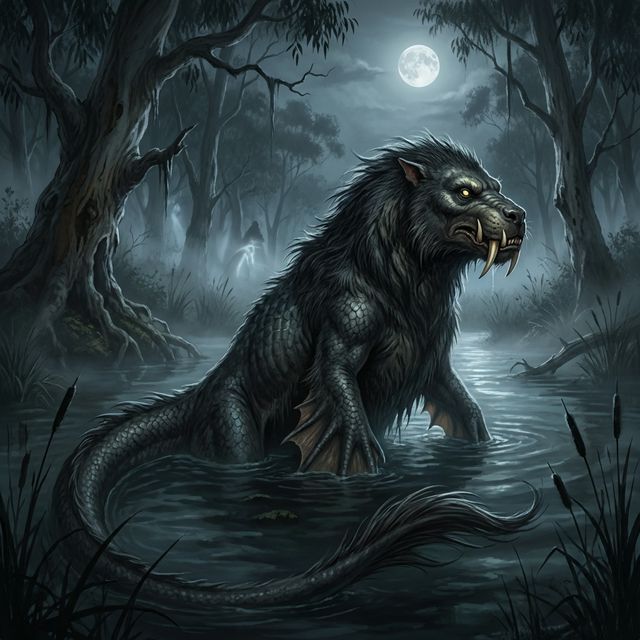
- The Chimera: A dog-faced seal with tusks, flippers, and a horse-like tail.
- The Starfish: A variation described as a giant, one-eyed starfish that attaches to victims.
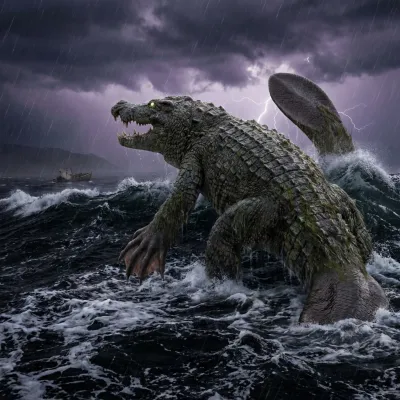
- The Serpent: A long-necked, bristle-maned variation similar to a sauropod. Despite the variance, the constants are the eyes—which glow with fervent malice—and an amphibious biology suited for ambush.
The Hug of Death
The Bunyip does not hunt like a crocodile (bite and roll) or a shark (tear and thrash). It hunts like a constrictor.
Its primary kill mechanic is the "hug." It rises from the silt and wraps powerful forelimbs around the victim. It does not bite immediately. Instead, it squeezes. The pressure collapses the ribcage and snaps the spine, paralyzing the prey. The victim is then dragged alive into the mud to drown in the dark. It prefers women and children, but reports exist of fully grown livestock being pulled under.
Spirit of the Waterhole
To the Aboriginal nations, the Bunyip is not merely a cryptid. It is a guardian spirit of the water. In a continent where water is scarce and dangerous, the Bunyip serves as the embodiment of the drowning risk. It punishes those who disrespect the water source or take more than their share. It is the danger of the stagnant pool made flesh.
Interaction Protocols
Survival near a billabong requires vigilance.
- Listen: The roar of the Bunyip is distinct—a deep, booming sound that resonates in the chest. If heard, move to high ground immediately.
- Watch the Turbidity: A sudden clouding of clear water indicates movement in the silt.
- No Night Swimming: Entering a billabong after dusk is considered a reckless invitation.
The Floating Log
The water is still. The mosquitoes are biting. In the center of the lagoon, a dark shape breaks the surface. It looks like a log.
The Final Warning
But logs do not swim against the current. And logs do not blink, so step away from the edge.
Featured Creature Profile
Bunyip
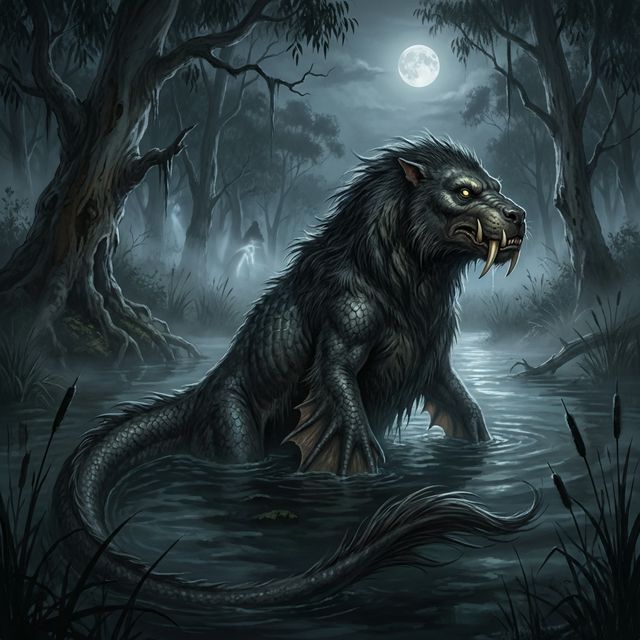
Bunyip is a cryptid water-monster reported from billabongs, river bends and reed-fringed swamps. Field notes register a bulky, amphibious presence that moves with deliberate, powerful strokes and keeps its head low to the waterline. Smell: wet peat and crushed reeds with a faint metallic tang. Sound: a low, echoing bellow or prolonged gurgle at dusk — distant, mournful and resonant across still water. Temperature: though the habitat is cool, the beast's breath is humid and oddly close, and the air near its haunt takes on a thick, stifling quality. Visual signs include semicircular scours along muddy banks, overturned logs, concentric ripple-trails in calm water and sudden, unexplained silences among waterfowl. It reads as an apex, territorial aquatic predator — secretive, deliberate and most active in low light.