Jenglot: The Blood Doll
The Miniature Vampire
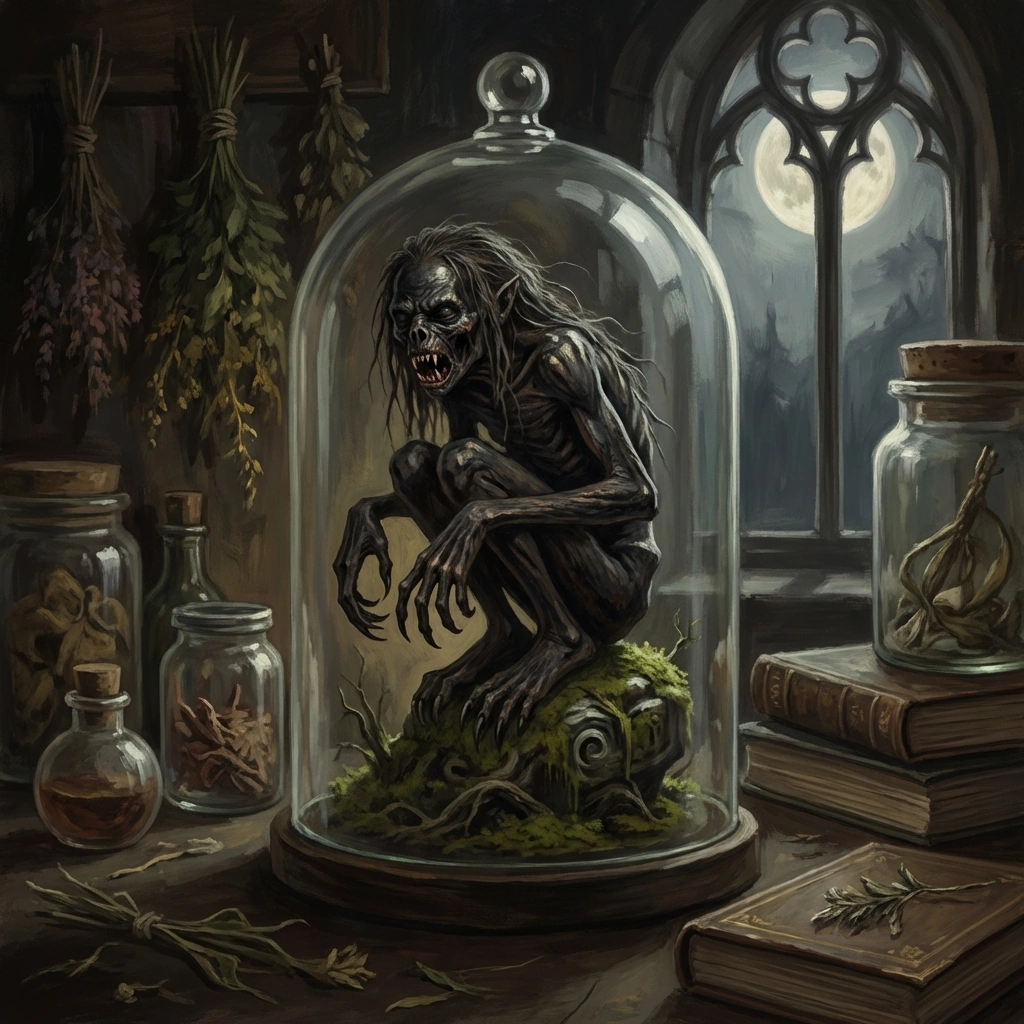
The Jenglot is a cryptozoological oddity found in Indonesia (Java). Physically, it resembles a mummified humanoid fetus or a tiny, dried corpse, rarely exceeding 15cm in length. It has sharp fangs, long fingernails, and often the lower body of a snake or fish. It is not alive in the biological sense—it does not breathe or move when watched. But it is spiritually resilient. It is a vessel for a dark spirit.
The Origin of the Ascetic
Folklore claims the Jenglot was once a human. It was an ascetic or hermit who practiced dark magic to gain immortality (Ilmu Batara Karang). The ritual failed, shrinking their body to the size of a doll while trapping their soul inside. Rejected by the earth (which refused to decompose them), they exist in a state of suspended animation, eternally hungry.
The Maintenance Fee
The Jenglot is kept as a talisman for wealth, luck, or protection. But it requires payment.
- The Food: It consumes blood (usually human or goat).
- The Ritual: Every Friday night (Jumat Kliwon), the owner must mix a drop of blood with scented oil. The liquid vanishes, consumed by the spirit.
- The Danger: If the owner forgets to feed it, the Jenglot will feed itself—taking the blood from the owner's family while they sleep.
Forensic Analysis
DNA tests conducted on Jenglot specimens in Malaysia have yielded inconclusive results (a mix of human and animal DNA), reinforcing the belief that they are chimeras constructed by shamans. However, owners insist the hair and nails continue to grow and must be trimmed. It is an artifact that blurs the line between taxidermy and demonology.
The Final Warning
A pet that eats you is not a pet; it is a parasite. If you see a small, dried-up doll for sale in a Jakarta market that smells of jasmine and copper, walk away. To own a Jenglot is to sign a contract written in blood, and the interest rate is the life of your family, so do not buy the monster.
Featured Creature Profile
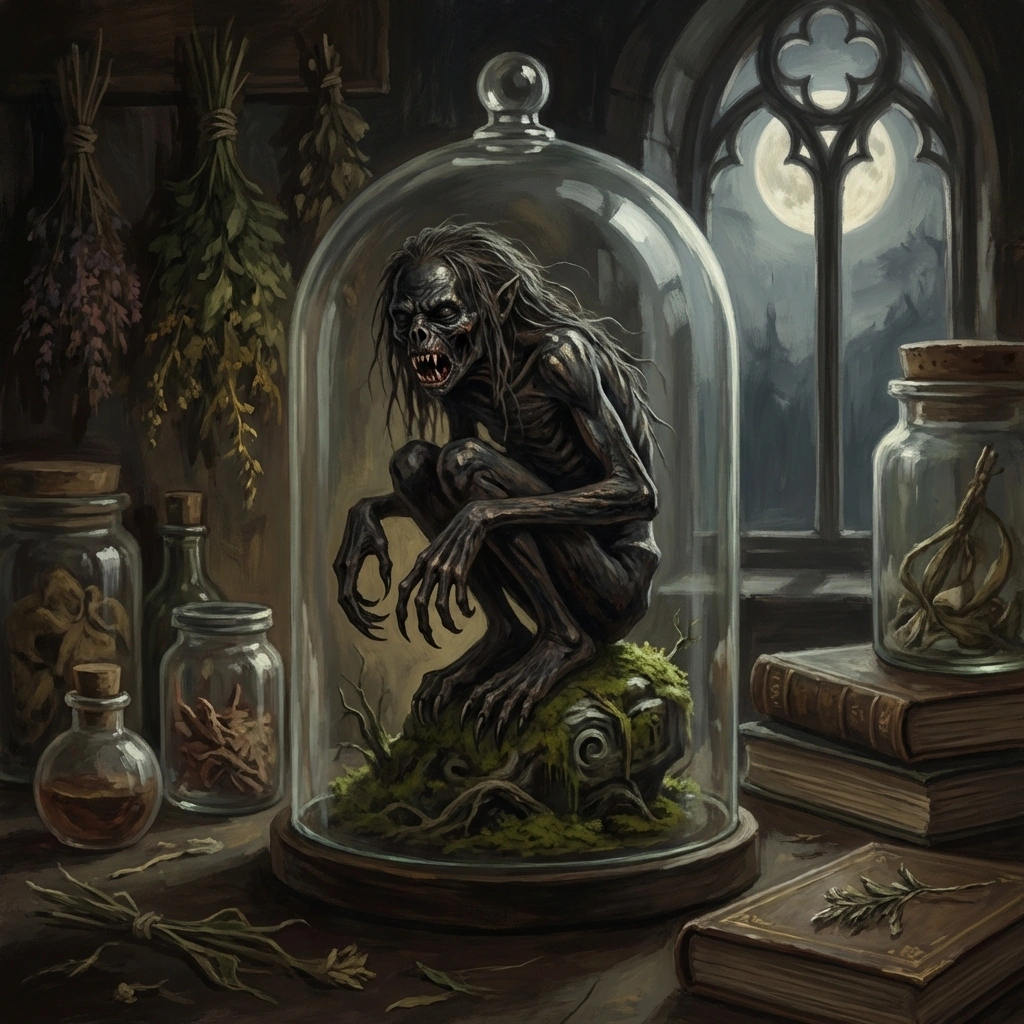
Jenglot
Jenglot is a small, humanoid relic often kept like a cabinet specimen: a shrunken, hair‑sprouting figure with a fixed, watchful face. Field notes record a sharp, metallic tang in the air—iron and old incense—backed by an almost imperceptible wet clicking or drawing at night. To the touch their surface registers unnaturally cool, as if the object refuses the surrounding warmth; hair and nails can feel oddly supple while the body itself remains hard and dry. Sightings sit at the edge between curiosity and unease: a creature that looks preserved yet behaves like a hungry thing.