Krampus: The Shadow of Saint Nick
The Anti-Clause
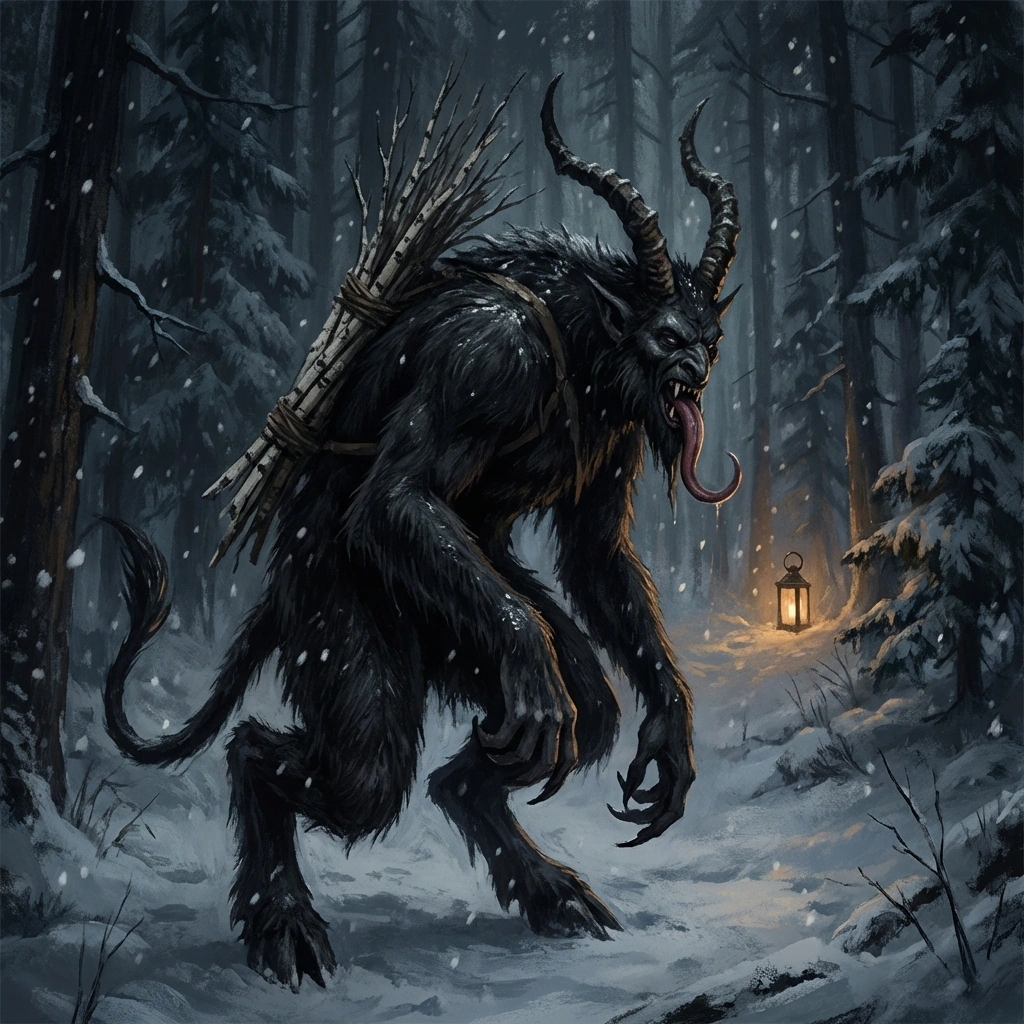
Krampus is the necessary balance to the benevolence of Christmas. Originating in Alpine folklore (Austria, Bavaria), he is the dark companion of Saint Nicholas. While the Saint brings oranges and nuts to good children, Krampus brings judgement to the wicked. He is a horned, anthropomorphic figure, half-goat and half-demon. He is covered in coarse black fur, possesses cloven hooves, and is defined by a long, pointed tongue that lolls from his mouth.
The Tools of Discipline
Krampus is not a subtle monster. He is loud. He carries chains and cowbells, which he rattles to announce his arrival in the darkness of winter. His arsenal includes:
- The Ruten: A bundle of birch branches used to whip naughty children.
- The Sack: A woven basket on his back used to abduct the "hopeless" cases, carrying them off to his lair or (in darker versions) to hell.
Krampusnacht
On the night of December 5th (Krampusnacht), the demon roams the streets. This tradition survives as the Krampuslauf (Krampus Run). Hundreds of men dress in elaborate wooden masks and sheepskin suits, running through the town, drinking schnapps, and terrifying spectators. It is a cathartic release of primal fear in the dead of winter. A reminder that the cold dark is watching.
The Greeting Cards
In the 19th Century, "Krampus-Karten" (Greeting Cards) were popular. They depicted the demon engaging in horrific acts—stuffing screaming children into cages or threatening them with sticks—captioned with "Greetings from Krampus." It suggests a culture that understood that fear is a potent educator.
The Final Warning
Be good, not because it is nice, but because the alternative has horns. If you hear bells in the snow, lock the door.