Nian: The Lunar Beast
The Origin of the Holiday
The biggest celebration on Earth began as a survival horror. In Chinese mythology, Nian ("Year") was a terrifying beast. He inhabited the depths of the ocean (or the mountains), sleeping for the entire year. He awoke only on the last night of the lunar year (New Year's Eve). Hungry and furious, he would emerge to ravage villages, eating livestock, grain, and his favorite delicacy: children. This yearly terror was known as Guo Nian ("Passing the Year" or "Surviving the Nian").
The Beast's Form
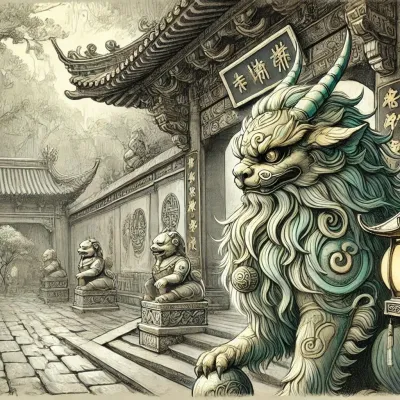
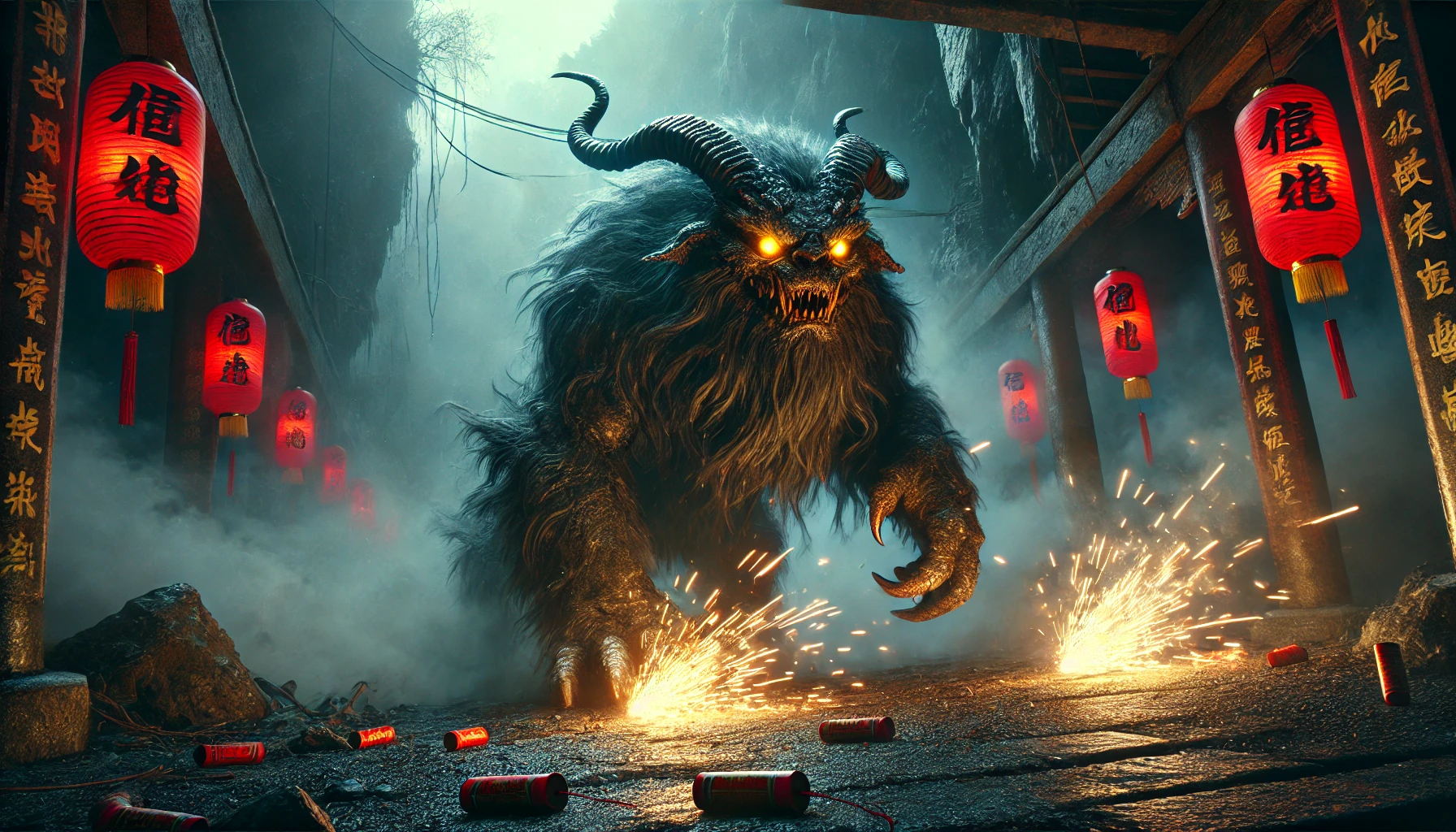
Nian is a hybrid monster. He possesses the head of a lion (flat-faced with a massive jaw), the body of a bull, and a single massive horn. His teeth are strong enough to crack stone. He is an apex predator of mythological proportions.
The Weakness
The villagers eventually discovered the Nian had sensory sensitivities. The Beast is terrified of three things:
- The Color Red: He hates the sight of it.
- Fire/Light: He fears bright flames.
- Loud Noise: Explosions cause him pain.
The Defense Strategy
This discovery created the traditions of the Lunar New Year.
- Red Lanterns & Couplets: Pasted on doors to act as a visual shield.
- Firecrackers: Set off all night to create a sonic barrier against the monster.
- Lion Dance: Dancers wear costumes resembling the beast to mock it and drive away evil spirits.
The Final Warning
The celebration is actually a re-enactment of a successful defense. We think of fireworks as celebration, but they began as a perimeter defense. Every explosion on New Year's Eve is a signal to the darkness that we are still awake, and we are still dangerous. If the lanterns go out, the Nian will return. The monster is not gone; it is just waiting for us to get quiet, so keep the lights on.