Top 10 Desert Monsters and Desert Mythical Creatures
Top 10 Desert Monsters and Mythical Creatures
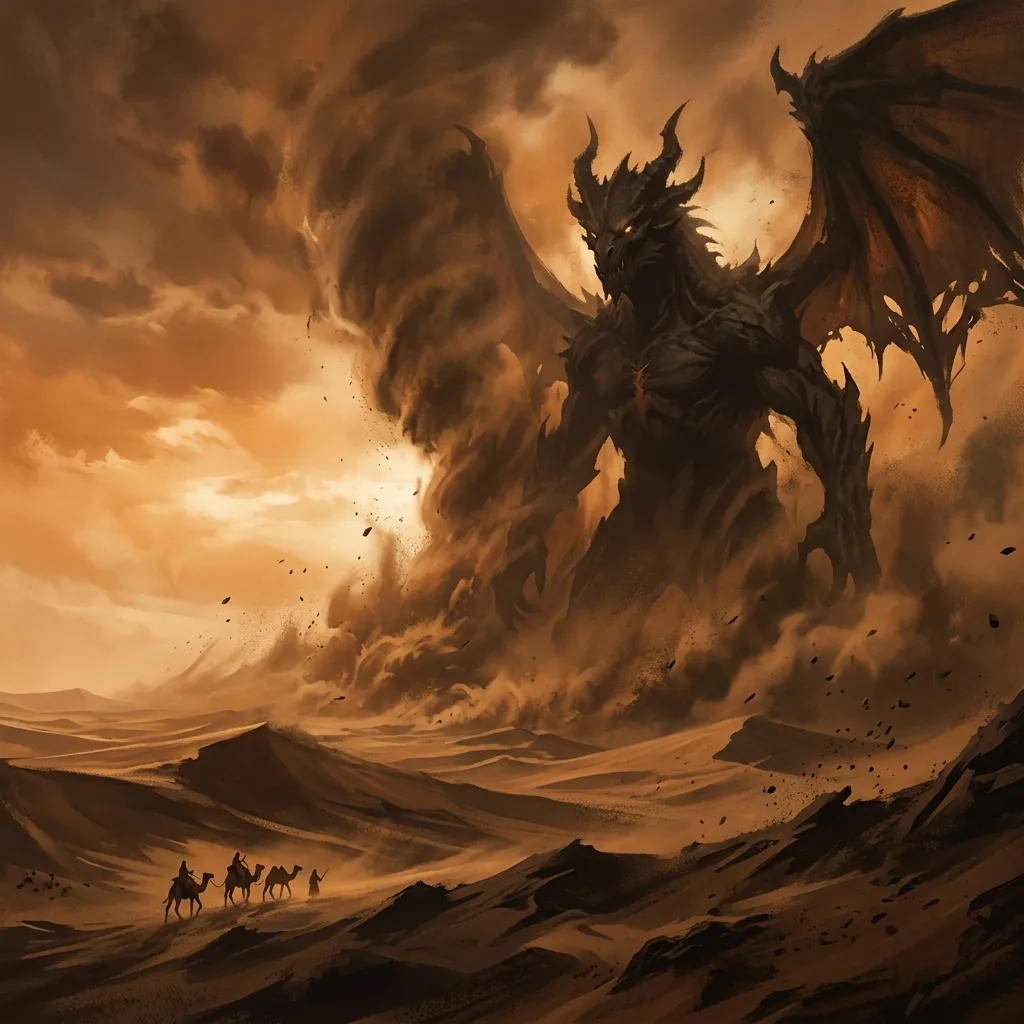
Deserts are some of the most inhospitable environments on Earth. The scorching sun, shifting dunes, and scarcity of water make survival nearly impossible. It is in these vast, empty wastelands that human imagination has conjured up some of the most terrifying and elusive monsters. When the heat distorts the horizon and the wind howls over the sand, you might just be looking at one of these top 10 desert creatures.
1. Jinn (Islamic Folklore)
Born from smokeless fire, the Jinn (or Genies) are perhaps the most famous supernatural beings of the Middle Eastern deserts. Unlike the friendly genies of modern pop culture, traditional Jinn are complex, invisible entities that live in ruins and desolate places. They can take the form of animals (often snakes or dogs) or humans. Some are benevolent, but many are malicious tricksters who lead travelers astray in the deep desert.
2. The Mongolian Death Worm (Mongolian Cryptid)
Deep in the remote Gobi Desert, nomads whisper of the Olgoi-Khorkhoi, or the Mongolian Death Worm. Described as a thick, blood-red worm about two to five feet long, it spends most of its time buried beneath the sand. When it surfaces, it is highly lethal—capable of spitting corrosive acid or discharging a deadly electrical shock from a distance to kill camels and humans alike.
3. Ammit (Egyptian Mythology)
In the ancient Egyptian afterlife, the ultimate punishment awaited those who lived wicked lives: Ammit, the Devourer of the Dead. A terrifying chimera, Ammit had the head of a crocodile, the front body of a lion, and the hindquarters of a hippopotamus—the three largest man-eating predators of the region. If the heart of a deceased person weighed more than the feather of truth, Ammit would devour it, erasing them from existence forever.
4. Sphinx (Egyptian & Greek Mythology)
A legendary creature with the body of a lion and the head of a human, the Sphinx was a guardian of ancient desert necropolises. While the Egyptian Sphinx is seen as a benevolent and protective symbol of royal power, the Greek version was a treacherous monster. Sitting outside the city of Thebes, she would strangle and devour any traveler who could not answer her famous riddle.
5. Serpopard (Ancient Egyptian & Mesopotamian Lore)
Found depicted on ancient cosmetic palettes and cylinder seals, the Serpopard is a mythical beast combining a leopard's body with a long, serpentine neck. Believed to represent the chaos of the wild borders outside civilized Egypt, these creatures were often shown being tamed or conquered by pharaohs to symbolize the subjugation of the wild desert lands.
6. Ghoul (Pre-Islamic Arabian Folklore)
A specific and terrifying class of Jinn, the Ghoul is a fiendish, flesh-eating demon that dwells in graveyards and uninhabited deserts. Ghouls are shape-shifters, often taking the form of an animal like a hyena, or a beautiful woman to lure unwary travelers off the desert trails. Once isolated, the traveler is devoured. They are the origin of the modern zombie and ghoul tropes in horror.
7. El Chupacabra (Latin American Cryptid)
While often associated with forests, the Chupacabra is equally infamous in the arid scrublands and deserts of northern Mexico and the American Southwest. Descriptions of this livestock-draining cryptid vary, but many claim it looks like a hairless, reptilian dog with spikes. Its ability to vanish into the harsh, dry brush has made it one of the most enduring legends of the modern desert.
8. Alicanto (Chilean Mythology)
In the unforgiving Atacama Desert of Chile, miners tell tales of the Alicanto, a nocturnal bird with luminous, metallic wings. The Alicanto eats gold and silver ores, which causes its feathers to glow brightly in the dark. Prospectors would try to follow the bird in hopes of finding rich veins of precious metals. However, if the bird realized it was being followed, it would turn off its light, leaving the greedy miners lost in the pitch-black desert.
9. Urmahlullu (Mesopotamian Mythology)
A protective spirit from ancient Assyrian and Babylonian lore, the Urmahlullu is a centaur-like creature with the upper body of a man and the lower body of a lion. Statues of these lion-men were placed at the entrances of temples and palaces to ward off evil demons of the desert and protect the inhabitants from illness and misfortune.
10. The Roc (Middle Eastern Folklore)
Though technically a creature of the sky, the Roc is deeply tied to the desert folklore of the Middle East. This bird of prey was so massive that it nested on remote desert peaks. Its shadow was said to be mistaken for a passing storm cloud, and it could easily snatch up entire caravans or elephants in its talons, making the open desert an incredibly dangerous place to travel.