The Unicorn: The Iron Horse
The Monster, Not the Pet
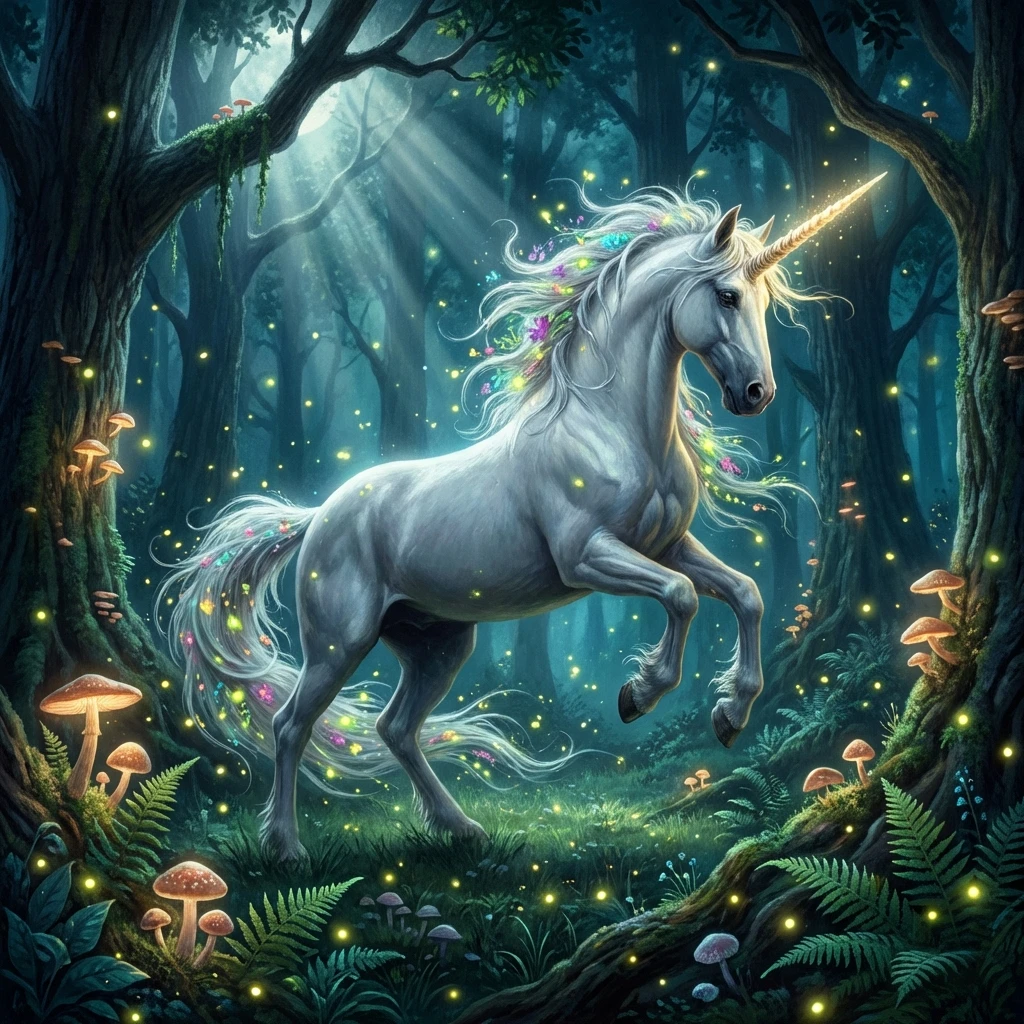
Modern culture has humiliated the Unicorn. It has been reduced to a sparkly pony for children's parties. But in the ancient Bestiaries and the writings of Pliny the Elder, the Monoceros was a biological weapon. It was described as having the body of a horse, the feet of an elephant, the tail of a boar, and a single black horn three feet long. It was the fastest animal on earth. It was so aggressive that it could not be taken alive.
The Alicorn
Its horn (the Alicorn) was the most valuable substance in the medieval world. It was the ultimate antidote. If a snake poisoned a river, the Unicorn would dip its horn in the water, purifying it instantly for all other animals. Kings paid fortunes for cups made of "unicorn horn" (often Narwhal tusk) because it was believed to neutralize poison or sweat if poison was near.
The Virgin Trap
The Unicorn was invincible in battle. It could only be defeated by one thing: Innocence. A hunter would leave a virgin maiden alone in the forest. Sensing her purity, the beast would approach and lay its head in her lap, falling into a trance. Only then could the hunters ambuscade and slay it. It is a story of betrayal. The beast dies because it trusted.
The Final Warning
Beauty is often a camouflage for danger. If you see something white moving in the deep forest that looks too perfect, too clean, and too graceful to belong to this world, do not approach it with a bridle. It is not a horse to be ridden; it is a weapon to be feared; it is a sword with legs.