Oni in Pop Culture
The Horned Ogre-Demons of Jigoku and Thunderous Clubs
The Evolution of Oni in Modern Media
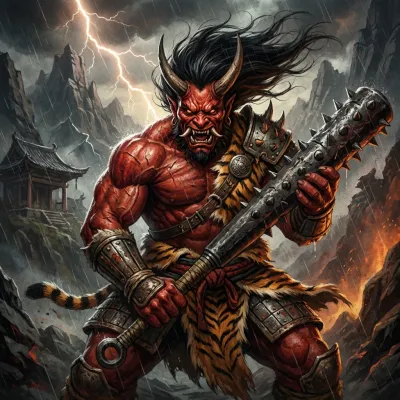
Towering horned demons of Japanese folklore with red or blue skin, wild hair, and tiger-skin loincloths, wielding the iron club (kanabō) as symbols of invincible brute force and guardians of Buddhist hell.
Key Media Tropes & Misconceptions
- Dual or single horns protruding from a ferocious brow
- Crimson or azure skin and protruding lower fangs
- Wielding the spiked iron club (kanabō)
- Proverb 'Oni ni kanabō' (giving a club to an oni = making the strong invincible)
Ancient Myth vs. Hollywood & Gaming
In traditional Japanese lore, Oni was revered or feared as a true yōkai (demon), representing natural forces, moral boundaries, and environmental taboos of its homeland.
Modern gaming and pop culture frequently adapt Oni into combat encounters, boss battles, or creature features, amplifying its physical menace while streamlining ancient rituals.
While popular media often treats Oni as a generic monster to be slain with weapons, ancient folklore taught that it could only be appeased, warded off with sacred taboos, or avoided entirely.
Verified Media Appearances
Explore every notable video game, movie, television, and literary depiction.
Demon Slayer: Kimetsu no Yaiba
Koyoharu Gotouge / Ufotable
The entire antagonist race of 'demons' are modern reimagined Oni, possessing superhuman regeneration and Blood Demon Arts.
Dead by Daylight: Cursed Legacy
Behaviour Interactive
Kazan Yamaoka, The Oni: an ancestral samurai whose blood fury transforms him into a demon sprinting across the map and smashing survivors with his Kanabō.
Nioh Series
Team Ninja / Koei Tecmo
Yoki and giant red/blue horned Yokai soldiers serve as core heavy enemies with devastating ground-slam attacks.
For Honor
Ubisoft
The Shugoki hero class channels the Oni persona: massive armored warriors wielding the iron Kanabō.
Frequently Asked Questions
What does the expression 'Oni ni kanabō' mean?
Literally meaning 'giving an iron club to an oni', this famous Japanese idiom means making someone who is already extraordinarily powerful completely invincible.
Why do Japanese people throw beans at Setsubun?
During the annual spring Setsubun festival, people throw roasted soybeans shouting 'Fuku wa uchi, oni wa soto!' ('Fortune in, demons out!') to banish evil oni spirits from homes.
Discover the True Myth Behind Oni
Dive deeper into traditional folklore with our complete codex entry, including authentic origin myths, survival advice, weaknesses, and powers.