God of War Bestiary
Mythic Bosses from Greek Antiquity to the Norse Nine Realms
Santa Monica Studio transformed ancient Mediterranean epics and Old Norse Eddas into an emotional deconstruction of generational trauma, fate, and divine cruelty.
Deconstructing Divine hubris Across Greece and the North
In the Greek era (2005–2010), God of War channeled the hyper-violent passions of Hesiod's Theogony and Homeric epic poetry. Monsters like Medusa, Cerberus, the Minotaur, and the Lernaean Hydra served as visceral manifestations of divine wrath and Olympic punishment.
With the 2018 Norse reimagining and God of War Ragnarök, the narrative approach shifted toward philosophical nuance. Rather than presenting the Aesir and Jötnar as cartoonish villains or pure monsters, Santa Monica Studio re-examined the Poetic and Prose Eddas from the perspective of marginalized giants and tragic fated beings.
Creatures like Jörmungandr (the Midgard Serpent) and Fenrir are treated with tragic grandeur, illustrating how the Aesir's paranoia brought about the very apocalypse they desperately tried to prevent.
- Greek divine punishment vs. Norse fatalism (Ragnarök)
- The tragedy of chained beasts (Fenrir, Prometheus)
- Deconstructing gods as flawed, insecure rulers
- Generational healing through mythic trials
All 14 Creatures in God of War
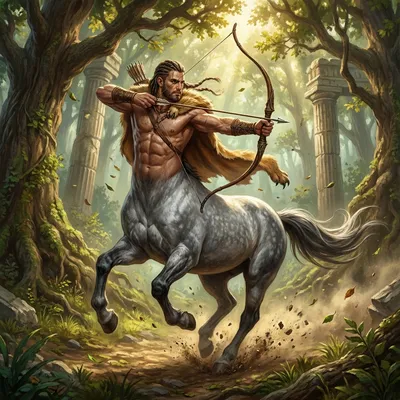
Centaur
Centaur Generals lead the undead armies of Hades wielding heavy naginata polearms.
In traditional Greek lore, Centaur was revered or feared as a true hybrid, representing natural forces, moral boundaries, and environmental taboos of its homeland.
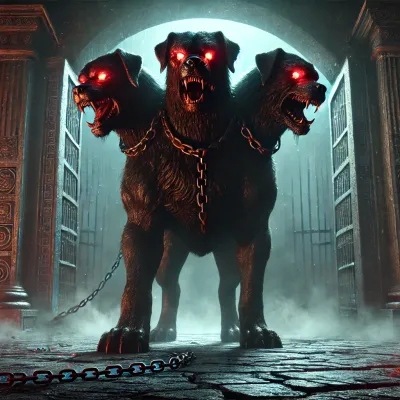
Cerberus
Fierce three-headed fire-breathing beasts that spawn Cerberus mongrels and require Kratos to sever their heads one by one.
In traditional Greek lore, Cerberus was revered or feared as a true guardian beast (monstrous hound), representing natural forces, moral boundaries, and environmental taboos of its homeland.
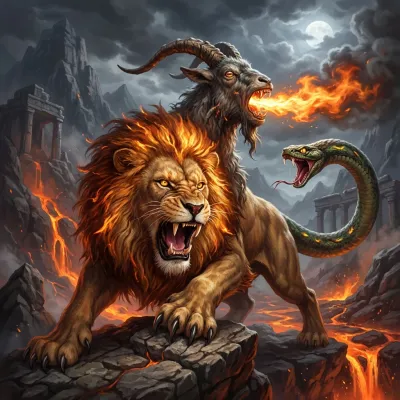
Chimera
A vicious mini-boss where Kratos severs the serpent tail first, beats the lion head, and snaps off the fire-breathing goat horns.
In traditional Greek lore, Chimera was revered or feared as a true beast/monster, representing natural forces, moral boundaries, and environmental taboos of its homeland.
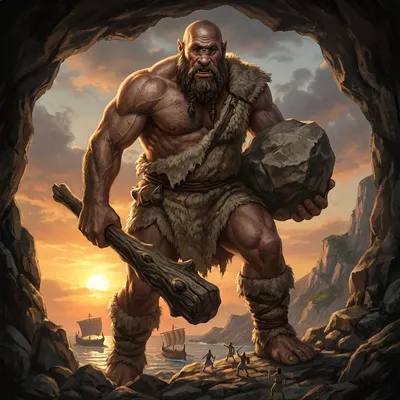
Cyclops
Recurring heavy brutes equipped with spiked clubs and armored helmets whose single eye can be ripped out in brutal QTE finishers.
In traditional Greek lore, Cyclops was revered or feared as a true monster (giant), representing natural forces, moral boundaries, and environmental taboos of its homeland.
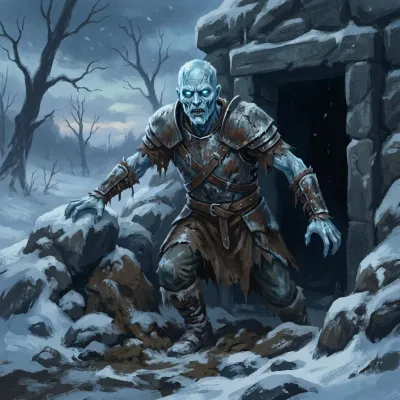
Draugr
The primary frontline foes Kratos and Atreus battle across Midgard, spawning in explosive, heavy, and dual-wielding variants.
In traditional Norse (Icelandic sagas) lore, Draugr was revered or feared as a true undead (revenant), representing natural forces, moral boundaries, and environmental taboos of its homeland.
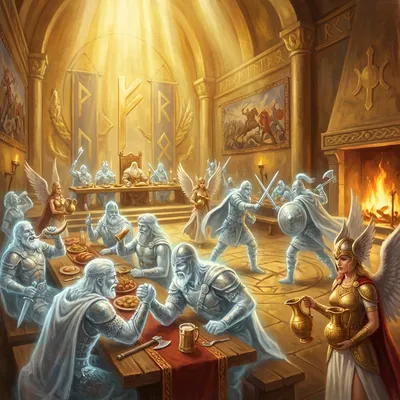
Einherjar
Odin's devoted, fanatical shock troops in Asgard, wearing golden armor and wielding glowing Bifröst weaponry that causes delayed burst damage.
In traditional Norse lore, Einherjar was revered or feared as a true deity (warrior spirits), representing natural forces, moral boundaries, and environmental taboos of its homeland.
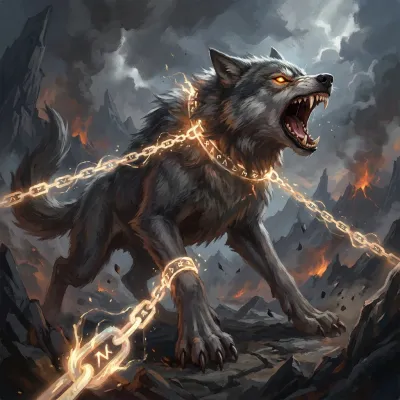
Fenrir
Atreus' beloved pet wolf whose soul is mistakenly placed in the gigantic realm-tearing wolf Garm, who then becomes Fenrir.
In traditional Norse lore, Fenrir was revered or feared as a true monster, representing natural forces, moral boundaries, and environmental taboos of its homeland.
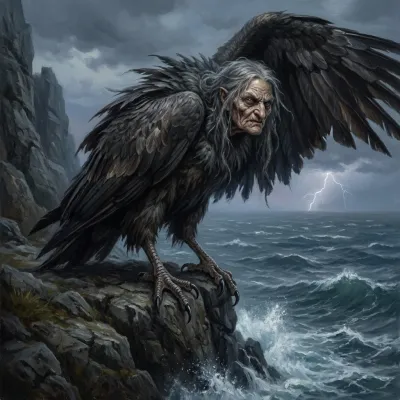
Harpy
Common flying pests across the series; in God of War III, Kratos can grab harpies and ride them across wide chasms.
In traditional Greek lore, Harpy was revered or feared as a true fae (monstrous winged), representing natural forces, moral boundaries, and environmental taboos of its homeland.
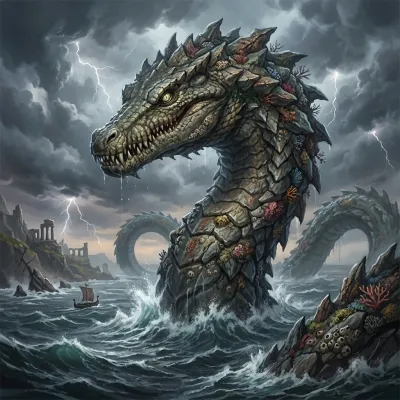
Jörmungandr
The majestic World Serpent sleeping in the Lake of Nine, speaking an ancient booming tongue and serving as an ally to Kratos and Atreus.
In traditional Norse lore, Jörmungandr was revered or feared as a true monster, representing natural forces, moral boundaries, and environmental taboos of its homeland.
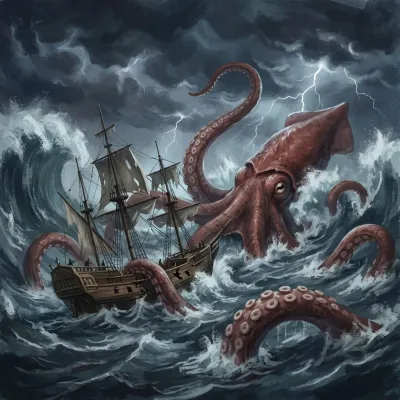
Kraken
Guards the Steeds of Time, requiring Kratos to pin its tentacles with bridge gears and ram an extendable walkway through its mouth.
In traditional Norse / Scandinavian lore, Kraken was revered or feared as a true sea monster (cryptid), representing natural forces, moral boundaries, and environmental taboos of its homeland.
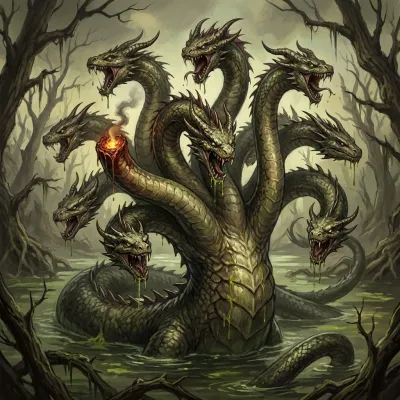
Lernaean Hydra
The opening tutorial colossus of the Aegean Sea: Kratos pins the smaller heads with cargo cranes before impaling the king head on a ship mast.
In traditional Greek lore, Lernaean Hydra was revered or feared as a true beast, representing natural forces, moral boundaries, and environmental taboos of its homeland.
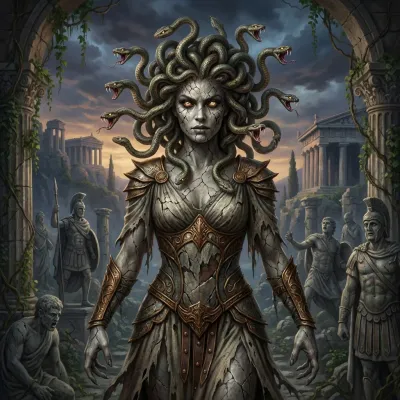
Medusa
Medusa and Gorgon Queens are pivotal enemies whose decapitated heads grant Kratos the ability to freeze legions into stone.
In traditional Greek lore, Medusa was revered or feared as a true gorgon (monster), representing natural forces, moral boundaries, and environmental taboos of its homeland.
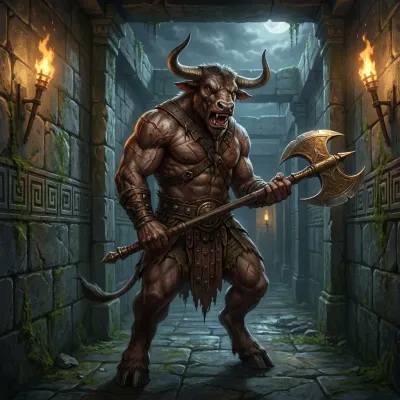
Minotaur
Heavy frontline shock-troops of Olympus and Hades, culminating in the armored Pandora's Temple Titan Minotaur boss.
In traditional Greek lore, Minotaur was revered or feared as a true monster, representing natural forces, moral boundaries, and environmental taboos of its homeland.

Surtr
Surtr dwells at the core of Muspelheim; sacrificing himself with Kratos' blades to combine with his beloved Sinmara, he becomes the giant beast Ragnarök.
In traditional Norse lore, Surtr was revered or feared as a true deity (jötunn, representing natural forces, moral boundaries, and environmental taboos of its homeland.
God of War Mythology & Folklore FAQ
How accurate is God of War Ragnarök to Norse mythology?
It captures the core themes of the Poetic Edda with astonishing fidelity—including the binding of Fenrir, the winter of Fimbulwinter, and the enmity between Thor and Jörmungandr—while recontextualizing the gods with modern psychological depth.
Why was Medusa an archer in early God of War?
Hesiod and Ovid described Medusa with bronze claws and golden wings. God of War followed Hollywood's tradition established by Ray Harryhausen's 1981 film 'Clash of the Titans', which turned her into a serpentine archer.
Is Kratos a real figure in Greek mythology?
Yes, Cratos (Kratos) was the minor Greek titan-god of divine strength and brutal force in Hesiod's Theogony, acting as the loyal enforcer of Zeus who bound Prometheus to the rock.
Other Mythological Gaming Bestiaries
The Witcher
Slavic Folklore & Dark Fantasy Bestiary
Persona & Shin Megami Tensei
The Ultimate Compendium of World Deities, Demons & Spirits
Castlevania
Gothic Bestiary of Dracula's Cursed Castle
Smite: Arena of the Gods
The Divine Third-Person Pantheon MOBA
Final Fantasy
Iconic Eidolons, Espers & Folklore Summons